

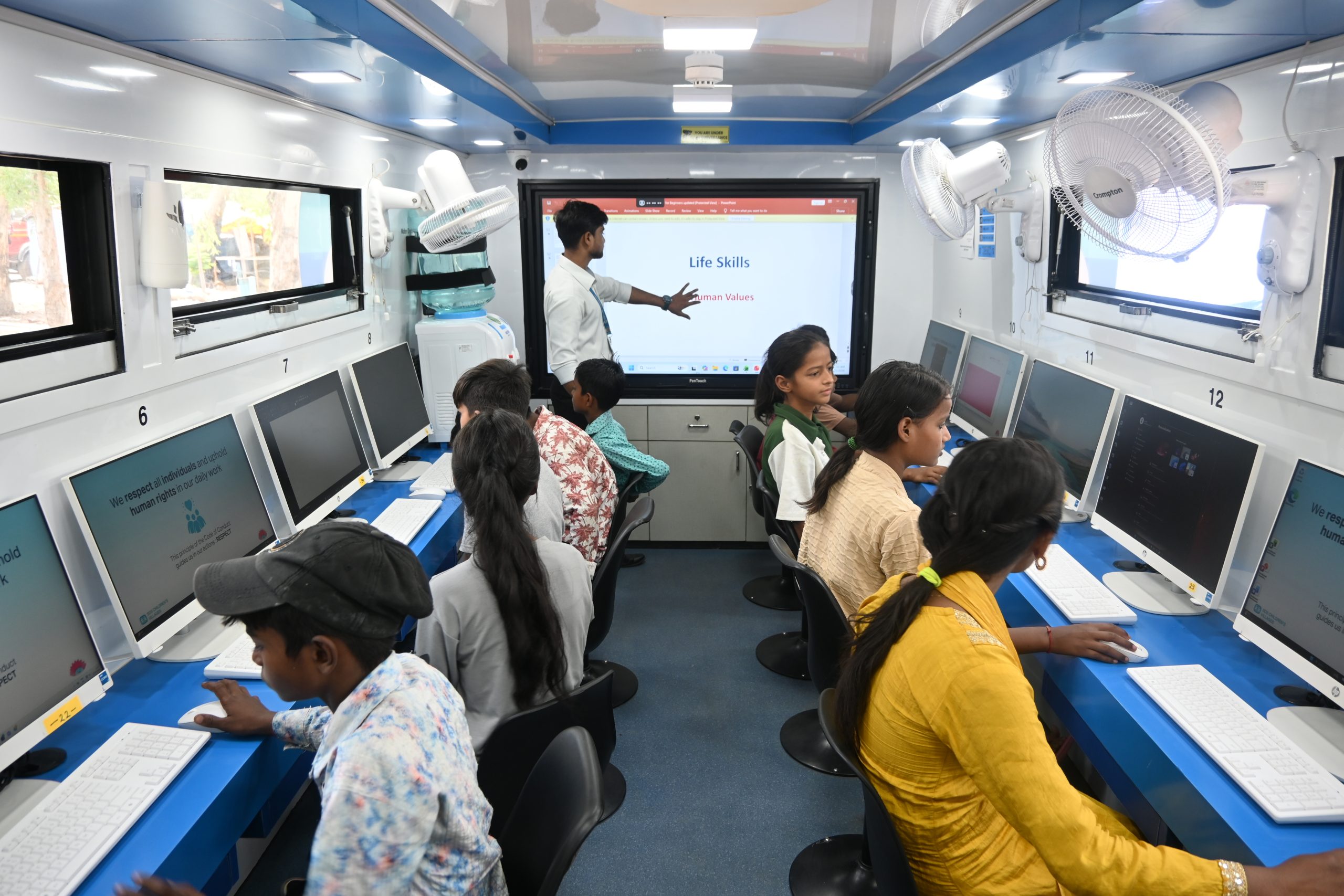
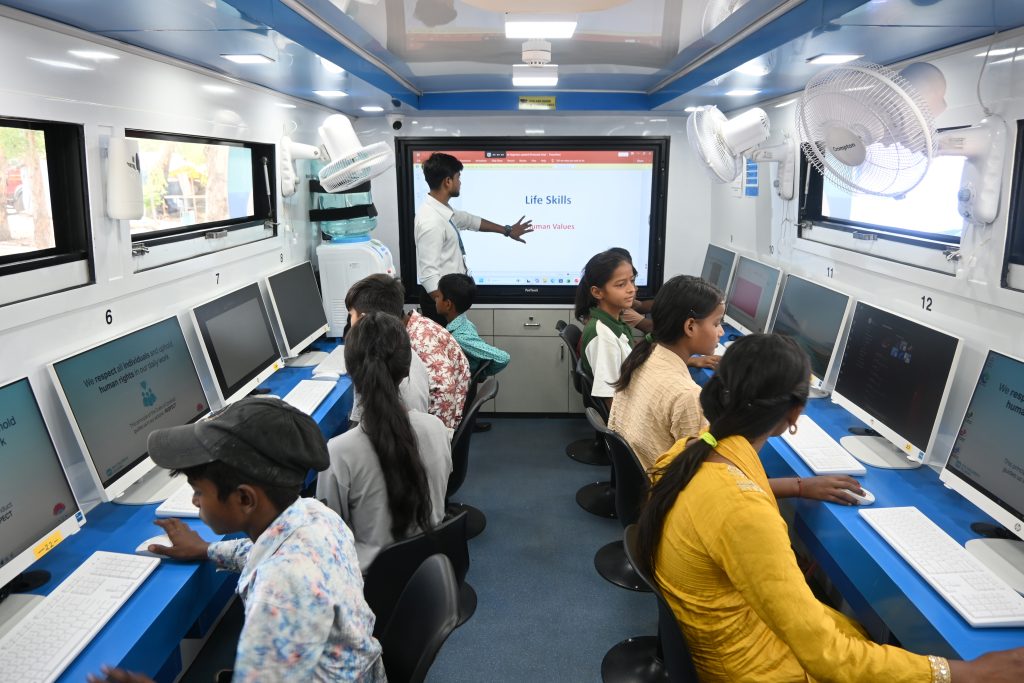
 Delhi: The capital took a step forward in its digital literacy journey as children from a vulnerable neighbourhood in North-West Delhi eagerly climbed the steps to a blue bus equipped with desktops and a projector screen, as SOS Children’s Villages India inaugurated its second mobile digital learning centre (MDLC) in New Delhi, in partnership with Informa Exhibitions, in the run-up to National Education Day.
The mobile digital learning initiative currently spans three cities across the country – Delhi, Pune, and Raipur, with a direct impact on over 800 lives. Among these 804 beneficiaries, 152 are children. With the inauguration of the new van, Delhi alone is looking at a target of more than 800 additional beneficiaries for the year to come. The initiative aims to bring free digital skills, job-ready training, and confidence in digital learning to the youth and women hailing from marginal sections of society.
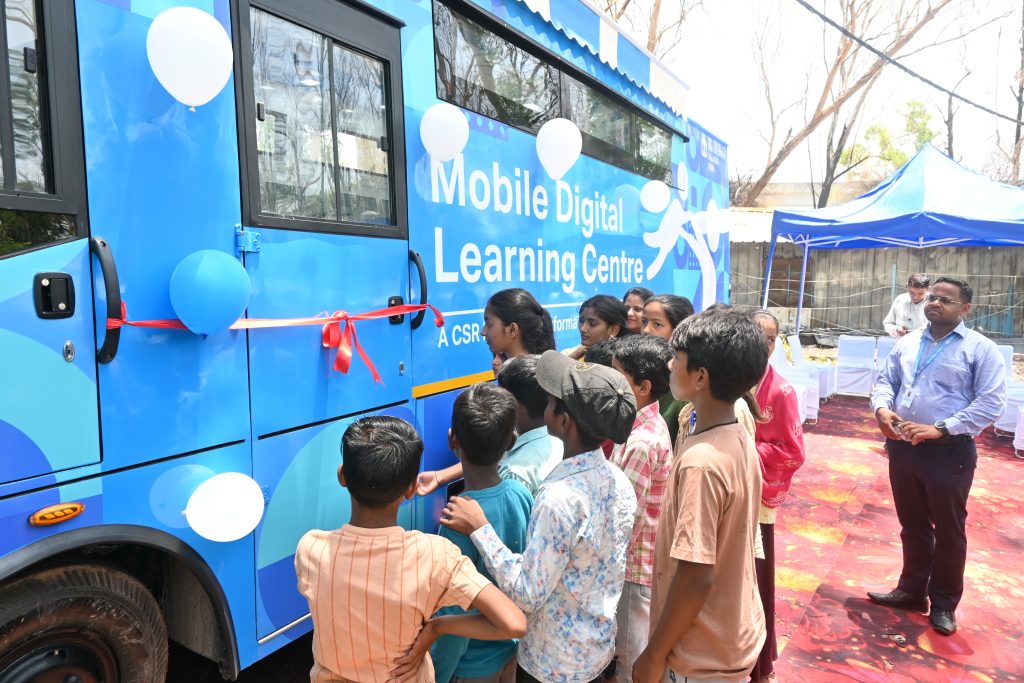 Sumanta Kar, CEO, SOS Children’s Villages India says, “Digital inclusion is a necessity for education, employability, and social mobility. Yet, for many children and young people living in underserved communities, access to technology and digital learning remains out of reach. Through our Mobile Digital Learning Centres, we are taking technology directly totheir neighbourhoods, ensuring that learning is not limited by geography or economic circumstances. The inauguration of our second mobile digital learning centre in Delhi marks another important step towards equipping children, youth, and women with the skills and confidence they need to participate meaningfully in an increasingly digital world.”
The capital city is home to 60,000 street children, most of them residing in North and Northwest Delhi, making the area the leading choice of location for the second DLC, as the area comprises of three lakh slum households across 675 clusters. 45 per cent of government school students residing in the area has no access to smartphones or a stable internet connection. A whopping 77 per cent of the youth in Delhi’s Northwest had no prior exposure to digital literacy.
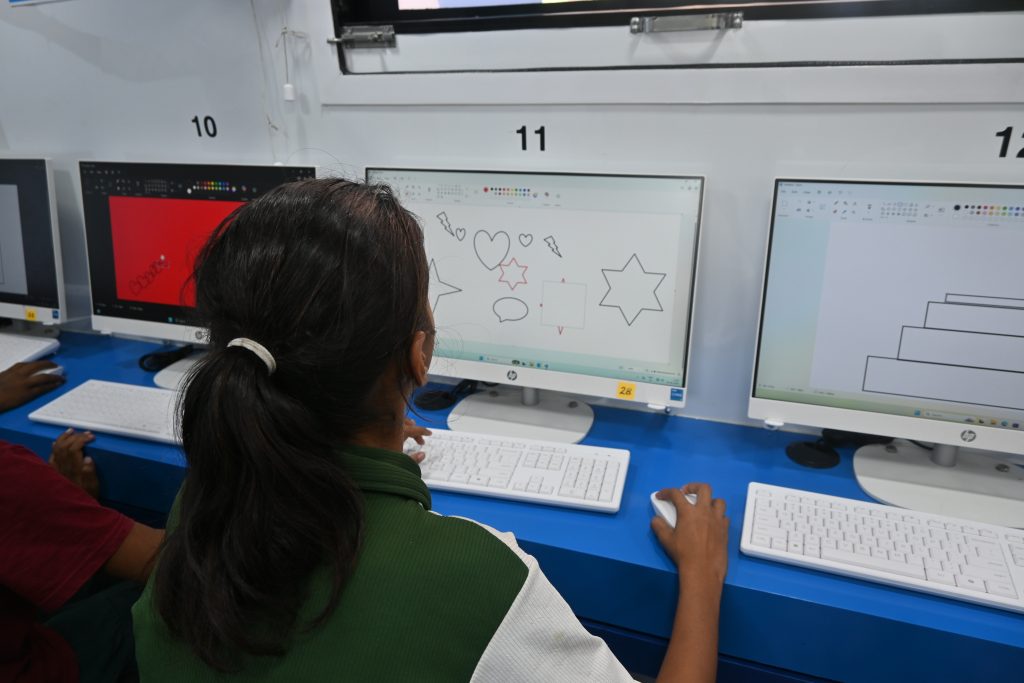
The MDLC offers its beneficiaries five main pillars of skills – digital literacy, cyber safety, financial literacy, life skills, and certified assessments. Within its first year, the MDLC successfully paved the way for five of its beneficiaries to get job placements, and eight children got re-enrolled at school. It also secured 28 links to scholarships and schemes, and 32 linkages to higher studies.
“When learning travels to a child’s own neighbourhood, distance, cost, and worry stop standing in the way. Every child deserves that chance,” adds Mr. Kar.
The Mobile Digital Learning Centre is a subset of the larger national network of digital change run by SOS Children’s Villages India across seven states and eight cities. Through this network, the NGO runs a spectrum of vocational training and digital learning centres through three programme modes. The mobile digital learning centre consists of customised buses that travel to slums and remote communities, the standalone vocational training centres (VTCs) are fixed centres for intensive vocational and digital skill training for beneficiaries aged between 18-27, and the afterschool VTCs are school-based DLCs for ages 14-17.
Through these vocational training models each beneficiary is equipped with academic progress, self-learning, digital employability skills, access to government services and schemes, financial inclusion, cyber-safety awareness, online learning habits, and a shot of social mobility. With 2610 young people participating annually, this model is proving to be a success and it aims to set course on an expansive journey in its bid to eradicate digital illiteracy in India.