


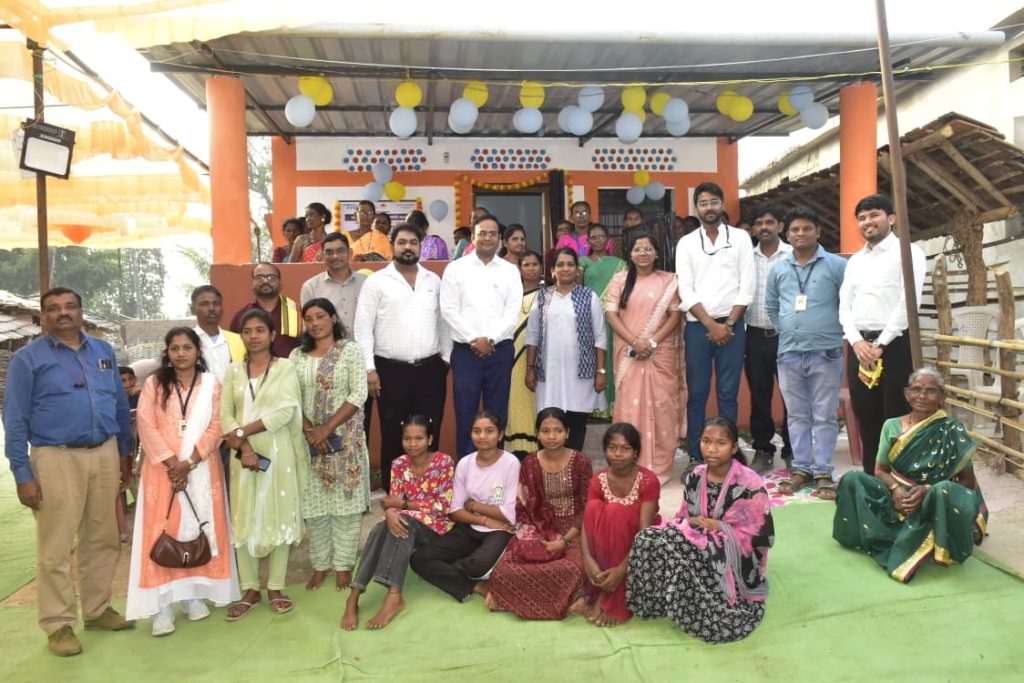
 Gadchiroli: A Pune-based charity, Mukul Madhav Foundation (MMF), has reached a significant milestone with the completion of its 24th Period Positive Holiday Home across 24 hamlets in the Dhanora block of Gadchiroli district. This is one of India’s most backward, tribal, and naxal-affected regions as identified by the Government of India. What began as a small, compassionate response during the peak of the COVID-19 pandemic has today evolved into a model of dignity, sustainability, and women-led empowerment.
For generations, menstruating women and girls in parts of Gadchiroli were compelled to stay in unsafe period huts, locally known as Kurma Ghars, located at the end of the forest. These spaces exposed them to health risks, social exclusion, and physical danger as they are not allowed to cook or do any kind of common domestic work and food and water are delivered by villagers.
Recognising that menstruation should not result in isolation or punishment, MMF reimagined these huts as safe, hygienic, and eco-friendly spaces termed Period Positive Holiday Homes. The women of Tukum village, where the first modern-period hut was built in 2020, were introduced by implementation partner Yuva Parivartan. Subsequently, MMF also invited corporates, individuals, and other NGOs, such as Project Naveli, to support the initiative, with Finolex Industries Limited remaining the principal donor. MMF firmly believes in collaborating with like-minded individuals and organisations to strengthen impact.
The voices of many women echoed the same painful truth. “We stayed there alone, in fear,” they recalled. “One of our sisters died of a snake bite. There was no one to help her. Our relatives could not come near, and the men stood at a distance, watching helplessly, because they believed they would become impure if they touched her.” Such was the harsh reality faced by women and young girls.
In earlier times, as their menstrual dates approached, anxiety would begin to build. The thought of moving into the thatched hut filled them with dread. The structure had no proper ventilation and lacked even the most basic facilities. It was dark, cramped, and unsafe. For bathing or washing clothes, the women had to walk nearly a kilometre to the nearest water body, often alone and vulnerable.
What should have been a natural biological process became a period marked by isolation, fear, and indignity.
Built using innovative bottle-brick construction, the initiative tackled two challenges simultaneously—plastic waste and menstrual stigma. What began as basic Safe Resting Homes has evolved into Period Positive Holiday Homes, transforming both physical infrastructure and community mindsets.
Initially, simple rooms with basic sanitation, the spaces were redesigned through continuous engagement with women to ensure dignity, safety, and comfort. Today, each Holiday Home includes safe toilets and bathing facilities with assured water supply, solar lighting and fans, comfortable mosquito-protected sleeping spaces, kitchenettes with smokeless chullas, clean drinking water, first aid support, secure storage, and climate-responsive design features.
Recognising that menstrual health is inseparable from access to water and sanitation, the initiative integrates strong WASH infrastructure to ensure privacy and hygiene. Over time, these homes have become more than resting spaces; they are centres of empowerment. Equipped with sewing machines and basic training facilities, several Holiday Homes now support skill development and livelihood generation, enabling women to rebuild confidence, income, and agency.
The project has also created livelihood opportunities through the training of local masons, painters, and helpers, green job creation via bottle-brick construction, and promotion of sanitary napkin production at the village level. In building dignity for women, the initiative has contributed to strengthening local economies and skills.
The impact of the Period Positive Holiday Homes has drawn national and international recognition. The initiative has been featured by BBC News, highlighting its innovative approach to addressing menstrual stigma and sustainable construction. It also received special recognition on the popular television show Kaun Banega Crorepati, where its story was shared with a nationwide audience, further amplifying the message of dignity, safety, and empowerment for women.
State Public Health Minister Prakash Abitkar inaugurated the “Period Positive Holiday Homes” at Pawni, located in Dhanora taluka of Gadchiroli district.
He expressed heartfelt gratitude to Mukul Madhav Foundation, Finolex Industries, and Yuva Parivartan for improving healthcare support in remote villages by providing Period Positive Holiday Homes for women. He stated that MMF has implemented 24 such projects across different villages in Dhanora taluka, describing it as remarkable social work by MMF and Finolex Industries.
He further expressed hope that the organisations would continue supporting similar initiatives in the future, with a strong focus not only on women’s health but also on skill development programs to help women improve their economic status.
He emphasised the importance of improving the health of poor women and maintaining proper hygiene during menstruation to prevent infections.
“The Period Positive Holiday Home goes beyond awareness. It creates safe, nurturing spaces where girls and women can manage menstruation with comfort, confidence, and dignity. At MMF, we believe meaningful change happens when communities, partners, and institutions come together to respond collectively to the real needs of society, placing hygiene and care at the heart of menstrual health.
We are deeply grateful to the local communities who welcomed us with such warmth, despite the challenging terrain and circumstances. Their trust and support strengthened our resolve and enabled us to continue this journey with commitment and compassion,” said Mrs Chhabria of Mukul Madhav Foundation.
“I commend Mukul Madhav Foundation for its sustained leadership in advancing period positive home construction in tribal communities. By integrating dignity, privacy and menstrual well-being into the design of homes, their commitment deserves sincere appreciation,” said Dr Rani Bang, Co-founder, SEARCH Gadchiroli.
“At Yuva Parivartan, we deeply value our partnership with Finolex Industries Ltd. and Mukul Madhav Foundation and are grateful for their continued trust and support. What began as a small intervention has grown into a powerful movement that restores dignity, safety, and confidence to women and girls during menstruation. MMF’s commitment to listening to communities, improving infrastructure thoughtfully, and integrating sustainability and livelihoods has transformed Period Positive Holiday Homes into spaces of care, learning, and empowerment. We thank MMF for standing with us and the communities of Gadchiroli and us in reimagining menstruation with dignity and compassion,” said Darshana Sawant
“Empowering women is a truly revolutionary step — it changes mindsets, reshapes futures, and unlocks the limitless potential of our society. When we invest in women, we invest in lasting progress,” said Sandip Patil, IPS DIG, Nagpur region.
As MMF marks this achievement, the Foundation reiterated its commitment to creating environments where menstruation is addressed with care rather than exclusion, and where women are supported to live healthy, confident, and self-reliant lives.