



 Shruti Shibulal is the CEO and Director of Tamara Leisure Experiences and Founder of The Tamara Foundation.
Sustainable development was first introduced as a concept in corporate mandates; sustainability was driven and defined in large part as a response to climate change. Initiatives and benchmarks aimed to mitigate environmental erosion by focusing on metrics like resource conservation, carbon mitigation, and waste reduction. The ubiquitous symbol of green operations became the continuum of ‘reduce, reuse and recycle’. Over those early years, even as sustainability evolved to encompass a broader set of disciplines and targets – including regenerative practices spanning biodiversity and reforestation – the focus continued to remain on environmental factors.
Today, sustainability is beginning to be understood, applied and measured in its most holistic format to date. Circular sustainable structures – reducing, reusing, and recycling – are now more accurately described as spherical due to their multilateral functions, which include collective action, collaborative operations, and increasing synergy with auxiliary markets as well as public sector policies. The engine of this dynamic, interdimensional model of sustainability is people. In this model, people represent both stewards and benefactors of a sustainable future. As a deeply, innately human-centric sector, hospitality is therefore uniquely positioned to lead this transformation.
Why Sustainability in Hospitality Needs Reframing
Hospitality is labour-intensive, people-led, and culturally embedded. Region-specific offerings are intertwined with a local workforce, providing services that honour tradition and experiences that connect with history. Human networks protect and perpetuate all aspects of this system. Sustainable hospitality – whether measured by internal operations or guest experiences – is a consequence chiefly if not exclusively of the people it impacts (native residents), the people it employs (workers and vendors), and the people it serves (patrons).
Establishing a mutual relationship with local residents is essential for a sustainable hospitality business that supports and empowers teams. Therefore, a sustainable enterprise must prioritise the development of an organisation that is integrally and actively committed to not only fair, equal treatment of people but also restorative and empowering policies. Gender parity and social equity are foundational to the long-term durability of human systems that steward thoughtful social, cultural and economic environments.
CSR frameworks should inform inclusive hiring practices. An equitable systemic approach to identifying, nurturing, and retaining talent will naturally influence perspectives on skill development, workplace safety, and access to opportunities. This transition permeates every touchpoint, creating a unified language across daily operations, leadership views, and long-term goals.
From Intent to Infrastructure: Where Sustainability Often Falls Short
As is the case with change that requires both ideological and behavioural shifts, the intention to secure gender parity and social equity is disparate from the application and outcome of such initiatives. Well-meaning policies that sit adjacent to operations are often underutilised or poorly implemented. Practices that are well-meaning but not culturally integrated become mere tasks rather than self-motivated norms. In many cases, what is intended for the best and theoretically positioned to do the most, backfires by triggering resentment or deepening bias.
To bridge the gap between a commitment to equity and its realisation, hospitality must integrate equity into its functions rather than its communications. This begins with treating Corporate Social Responsibility (CSR) as a foundational element rather than just a policy.
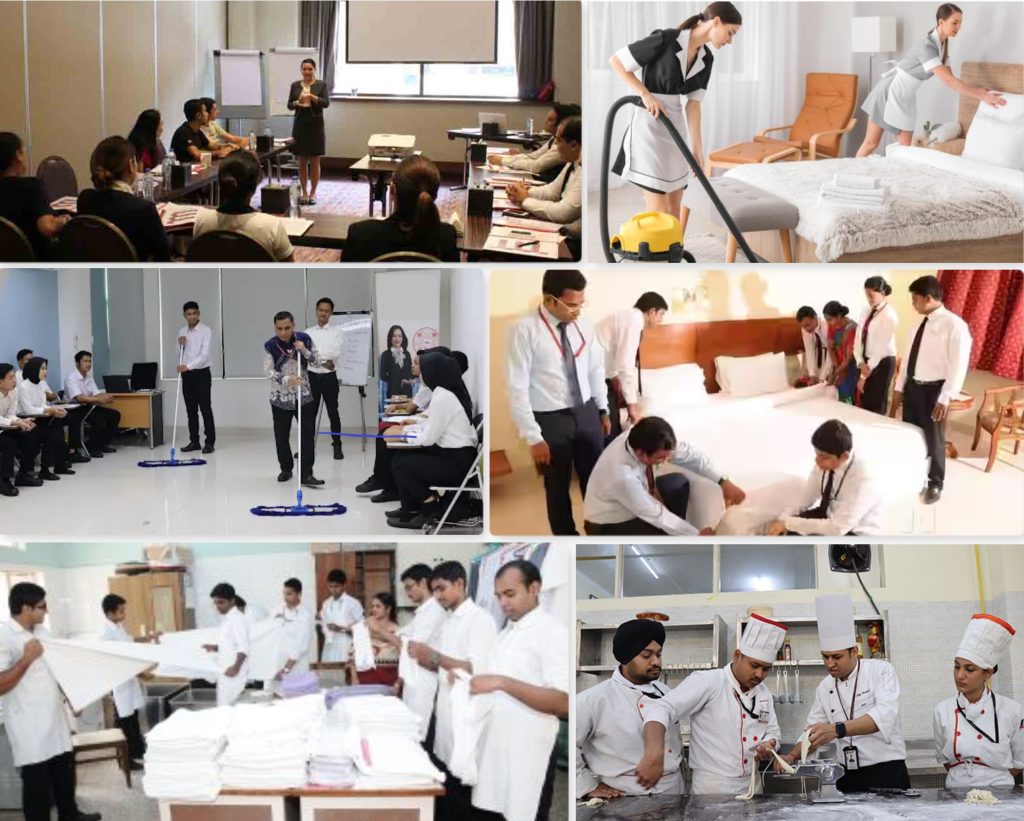 CSR frameworks should inform inclusive hiring practices. An equitable systemic approach to identifying, nurturing, and retaining talent will naturally influence perspectives on skill development, workplace safety, and access to opportunities. This transition permeates every touchpoint, creating a unified language across daily operations, leadership views, and long-term goals. Rather than merely mitigating biases, this type of integrative focus on inclusivity moves from policy-mandated change to advocacy-driven impact.
Gender Parity Beyond Representation: Understanding Structural Imbalance
Tokenism is a common pitfall of representation-focused recruitment and retention practices. Hiring quotas intended to promote or safeguard diversity need to be bolstered by leadership and teams that inherently understand the significant value of diversity in perspectives, not just in numbers. A diverse workforce constitutes diverse experiences, approaches and ideas. As evidenced by many globally venerated studies, these varied outlooks serve to reveal new opportunities, address strategic blind spots and create more sustainable momentum.
 In today’s hospitality industry, women make up a significant portion of the total workforce. They are, however, still highly concentrated across housekeeping, support services and entry-level operational roles. Women’s presence in leadership and decision-making positions continues to remain low. This data skew indicates that gender parity is not a participation issue but rather a progression issue. Women continue to encounter significant obstacles to upward mobility.
Digital exposure and literacy could provide essential upskilling and chart a path forward for women. As tech-enabled solutions, such as in-house data platforms, address internal communications, hospitality has the unique opportunity to orient workers across departments (including previously highly analogue departments such as housekeeping or landscaping) into digital systems. These relatively low-tech introductions to automated communications can bridge the digital divide between desk work and on-ground work, serving to not only optimise operations but also encourage ownership and accountability (both of which are essential leadership qualities), thereby instilling confidence and facilitating growth opportunities that benefit both workers and the organisation at large.
 Just as gender parity reflects gaps within the workforce, social equity widens the lens to observe disparities across a wider radius of impact. This includes dedicated contract workers, vendors, local organisations, and the communities that both support and are influenced by the hospitality industry. Their contributions are invaluable, and it is essential to recognise the impact that hospitality has on their lives.
When embedded into CSR frameworks, social equity strengthens connections between business performance and community well-being – it also invites guests to responsibly experience an extension of the local culture rather than a showcase of it.
Sustainability cannot be achieved if value is extracted unfairly. The communities that house hospitality’s workforce and supply its materials must be viewed as central to the operational framework, not as tangential. In every interaction, the hospitality industry must champion equity by implementing considerate work schedules, fostering safe environments, ensuring stability, and providing fair pay. These principles are not just moral imperatives; they are essential for creating a thriving and sustainable workforce.
 When embedded into CSR frameworks, social equity strengthens connections between business performance and community well-being – it also invites guests to responsibly experience an extension of the local culture rather than a showcase of it.
CSR-supported social equity initiatives play a crucial role in strengthening the human systems that hospitality relies on for sustainability.
Sustainability in the hospitality industry is fundamentally about endurance; enduring not only for ecosystems but also for people, cultures, and communities. While environmental stewardship is crucial, it is not enough on its own and may fail without additional support. Without achieving gender parity and social equity, sustainability efforts risk being fragile and ineffective in imbalanced systems.