


 Mumbai/New Delhi: Ten years after CSR was written into law, India Inc stands at a crossroads. CSR has evolved significantly to become a strategic lever for pressing development challenges. By 2035, CSR spending is projected to treble and exceed Rs 1.2 lakh crore[1] annually – making it the largest pool of philanthropic capital in the country. This presents a historic opportunity – to reimagine CSR as investment capital to drive systemic change.
Today, The Convergence Foundation (TCF) and its network organisation SCALE, launched their report, India Inc. for Building Bharat: How Systemic CSR is Building Enduring Impact for Tomorrow, co-authored with India Impact Sherpas. The event was held at The Quorum in Mumbai, with over 50 corporate and CSR leaders in attendance. The report documents emerging trends in corporate philanthropy, highlighting the rise of catalytic funding directed to organisations which support governments in strengthening public systems. It analyses 13 CSRs/CSR foundations which have adopted systemic giving models by aligning a proportion of their grantmaking or operating strategy. These foundations have created non-linear impact by using approaches which design proof-points for scale, build ecosystems and capacities, and develop public goods or technology platforms.
CSR spend in FY 2024 was Rs 30,000 crore, whereas the government has had a dominant role as a funder for the social sector, with a Rs 25.7 lakh crore annual social sector spend (8 per cent of India’s GDP)[2]. In light of this and the expected growth of the CSR funding pool in the next 10 years, the report argues that CSR can inform government expenditure by enabling innovation among Systems Support Organisations – an emerging cadre of nonprofits which work on finding systemic solutions and provide strategic support to governments.
Unveiling the report, Ashish Dhawan, Founder-CEO of The Convergence Foundation, said, “CEOs can set a bold vision by treating CSR as a long-term investment that creates non-linear social returns. To create large-scale impact, hiring a strong CSR leader with a genuine commitment to social impact is one of the most important decisions a business leader can make.” Dhawan called upon CEOs and business leaders to apply a portfolio lens to their entire CSR spend. “A company’s CSR can be treated as a portfolio, including a mix of direct, programmatic initiatives, and more systemic initiatives which tackle root causes of social issues. As the corpus of CSR grows in the next few years, companies can aspire to allocate 10-20 per cent of their portfolio towards long-term bets on systemic initiatives,” Dhawan said.
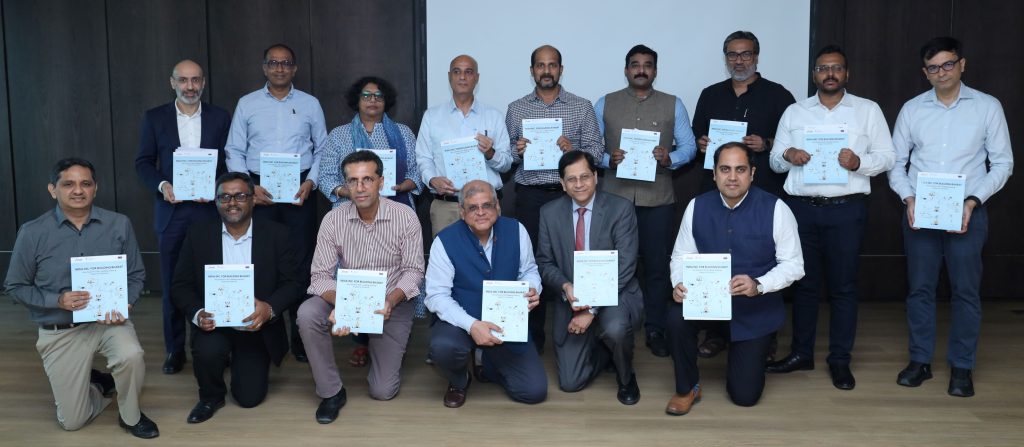
The report launched at the event highlighted a few critical enablers for systemic CSR:
- Promoters/business champions personally engaged in shaping philanthropic decision-making.
- Cipla promoters shaped Cipla Foundation’s focus on improving the palliative care ecosystem and shaping sector-wide standards of care.
- Bajaj Finserv’s “Skillserv” programme – a skilling initiative in the financial sector – was closely shaped by the promoters, and is currently implemented in 400 colleges across 23 States.
- Robust measurement mechanisms to track the effectiveness and systemic impact of CSR Programs
- Reliance Foundation uses a comprehensive Climate Resilience Index to measure the impact of its Rural Transformation programmes, which have cumulatively reached 21.3 million people over the years, on awareness and adoption, strong community networks, and ecosystem restoration.
- Cisco Foundation’s systems strengthening framework measures direct and indirect impact of their programs, especially for its multi-funder initiative – the Future Right Skills Network.
- Partnerships with governments and other funders to scale CSR initiatives and amplify impact
- HUL’s Project Circular Bharat has a range of partnerships with governments, community organisations, recyclers, startups, and knowledge experts.
- HSBC’s experience with the collaborative model of the Skills for Life programme became a replicable model, which informed India’s first Skill Impact Bond with NSDC, for which HSBC also became one of the outcome funders.
“CSR has matured significantly over the last few years, particularly since becoming a legal mandate in 2013. In its second innings over the next decade, there is an opportunity to use CSR as a strategic investment and act as a vehicle for transformative change. This report has spotlighted the journeys of 13 select CSR foundations, creating a powerful precedent that systemic impact is possible through CSR. There are many actionable learnings from the profiled models which are applicable to a wider business and CSR agenda,” said Govind Iyer, Chair of the CSR Committee at Infosys, and a member of the Advisory Board at TCF.