



 Sharada Adhikari Sharma is the Co-founder and Chief Science Officer of Astrum, India’s first specialist reputation management advisory that uses the Science of Persuasion to understand and shape public opinion ethically.
Corporate India has shown a remarkable commitment to social causes. According to a report from the Ministry of Corporate Affairs in April 2025, CSR investments reached an impressive ₹34,909 crore in FY24. This figure highlights the sector’s growing social awareness, marking a threefold increase from ₹10,066 crore in 2014-15, as noted in the same report. Such a significant investment represents one of the world’s largest mandated corporate social responsibility programmes and demonstrates a genuine corporate commitment to India’s development agenda.
Our comprehensive study, which analysed over 2,000 conversations across India, highlights significant opportunities to improve the effectiveness of well-intentioned investments in corporate social responsibility (CSR). While companies are enthusiastic about embracing their social responsibilities, there is considerable potential to enhance the impact of these efforts through more strategic approaches.
The Research Foundation: Our study, titled “From Transaction to Transformation: New Rules for CSR in the 21st Century,” offers insights into what makes social investments credible, sustainable, and genuinely transformative. To ensure authenticity and depth, we conducted 90 in-depth interviews with senior leaders in the social impact ecosystem, including CSR heads, project leaders, business executives, NGO leaders, and social impact experts. We also engaged 150 local influencers, such as panchayat members, healthcare workers, teachers, and Anganwadi workers, and surveyed 1,829 community members from diverse socio-economic backgrounds across India.
Our research reveals that while Corporate India has genuinely adopted CSR, many initiatives could benefit from enhanced strategic alignment. Companies frequently tackle multiple deserving causes, reflecting their desire to address various social issues. However, this well-meaning approach can lead to resource fragmentation, limiting long-term effectiveness. The most successful programmes in our study shared common characteristics: they were collaborative, built local capacity, and remained responsive to the evolving needs of the community.
The Current Landscape
Strengths and Opportunities: The distribution of CSR funds in India mirrors the country’s economic landscape. States such as Maharashtra (15 per cent), Karnataka (9 per cent), Gujarat (8 per cent), and Delhi (5 per cent) receive a substantial portion of these investments. While this concentration corresponds with the presence of industries and the capacity of organisations, it also presents an opportunity to expand successful models to underserved regions gradually. Many companies have made significant progress in tackling social challenges, including education, healthcare, and environmental sustainability. The real challenge lies not in the intention or scale of investment but in optimising these efforts to achieve the greatest sustainable impact.

From Good Intentions to Great Outcomes: Our research reveals that while Corporate India has genuinely adopted corporate social responsibility (CSR), many initiatives could benefit from enhanced strategic alignment. Companies frequently tackle multiple deserving causes, reflecting their desire to address various social issues. However, this well-meaning approach can lead to resource fragmentation, limiting long-term effectiveness. The most successful programmes in our study shared common characteristics: they were collaborative, built local capacity, and remained responsive to the evolving needs of the community. These examples illustrate that, with the right approach, corporate social investment can create lasting and meaningful change.
The Measurement Advantage: A key insight from our study highlights the increasing sophistication in impact measurement. Forward-thinking companies are moving beyond traditional metrics to focus on tracking outcomes and long-term transformations. This evolution reflects a deeper understanding of social investment and showcases corporate India’s commitment to accountability. The transition from merely counting reach to measuring outcomes signifies a significant advancement in the CSR landscape. Companies that have adopted robust measurement frameworks are better positioned to learn from their experiences, scale successful interventions, and demonstrate tangible value to their stakeholders.
At Astrum, we help companies define their Social Impact Focus (SIF) through a structured approach: Relevance, Alignment, Authenticity, and Targeting.
The Social Impact Index Framework
To assist organisations in enhancing their impact, Astrum has developed its proprietary Social Impact Index (SII), a practical tool designed for CSR leaders. The SII allows organisations to benchmark their efforts, identify areas for improvement, and develop strategic approaches.
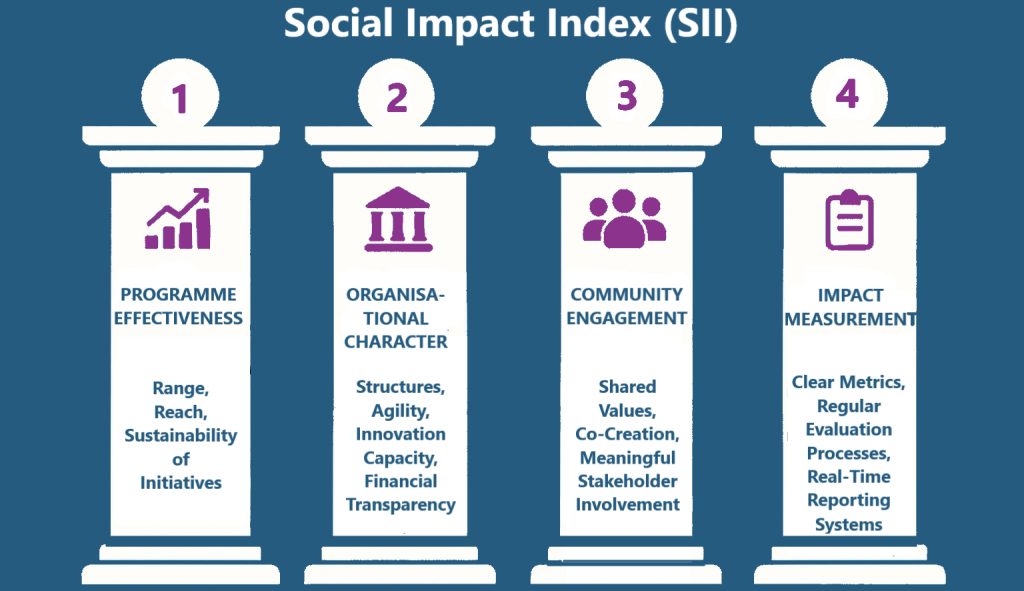
The SII consists of four pillars:
- Programme Effectiveness: This pillar focuses on the range, reach, and sustainability of initiatives, helping organisations design interventions that create lasting change.
- Organisational Character: This evaluates governance structures, agility, innovation capacity, and financial transparency—factors that enable consistent delivery of impact.
- Community Engagement: This emphasises shared values, co-creation, and meaningful stakeholder involvement, recognising that sustainable change requires local ownership and participation.
- Impact Measurement: This establishes clear metrics, regular evaluation processes, and real-time reporting systems that facilitate continuous improvement and accountability.
Discovering Your Social Impact Focus
Our research shows that the most effective CSR portfolios demonstrate a clear thematic focus aligned with organisational purpose. At Astrum, we help companies define their Social Impact Focus (SIF) through a structured approach:
 Relevance ensures interventions address genuine community needs through meaningful stakeholder engagement.
Alignment connects initiatives to national priorities and sustainable development goals, maximising systemic impact and policy coherence.
Authenticity aligns programmes with organisational values and strengths, creating sustainable commitment beyond compliance requirements.
Targeting defines specific demographics, geographies, and communities, enabling focused resource allocation and deeper engagement.
This approach helps organisations move from scattered giving to strategic social investment that leverages their unique capabilities and assets.
Corporate India can expand upon its impressive CSR journey to create even more meaningful and sustainable impact. Our study suggests that with the right frameworks and strategic focus, the existing momentum can be harnessed to drive transformational change that benefits both communities and businesses. The foundation is solid, and the potential is vast. The question is not whether Corporate India will succeed in its social mission, but rather how quickly it can unlock its full impact potential.
Four Strategic Enhancements
Our study identifies four areas where Corporate India can enhance its social impact:
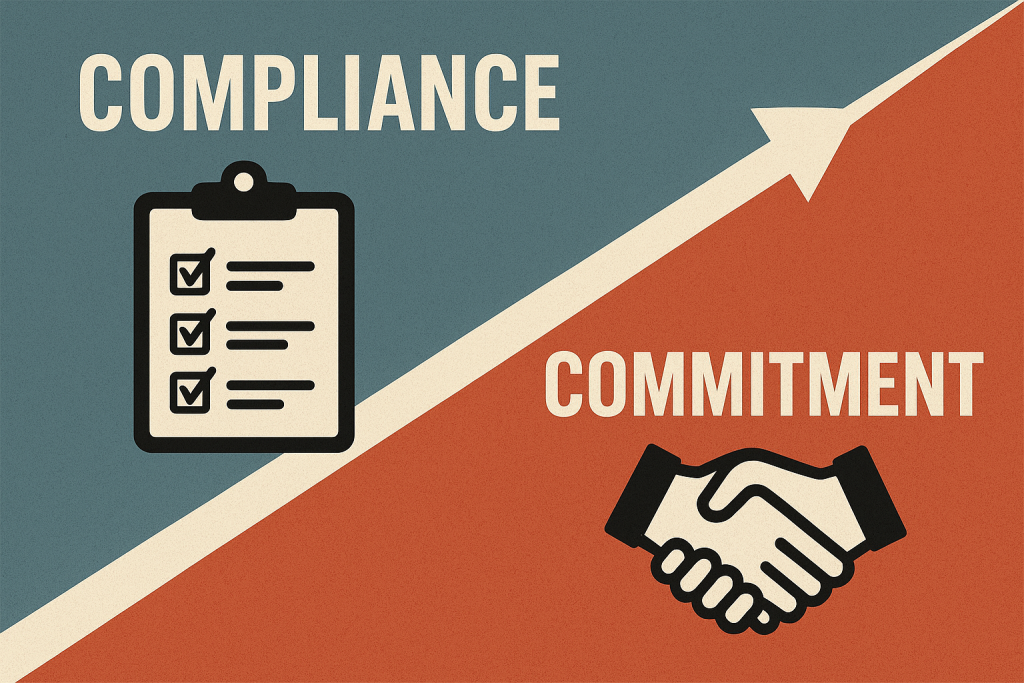 From Compliance to Commitment: The most successful companies view social impact as an integral part of their business purpose, rather than merely a regulatory requirement. This shift in mindset fosters innovation and encourages long-term thinking.
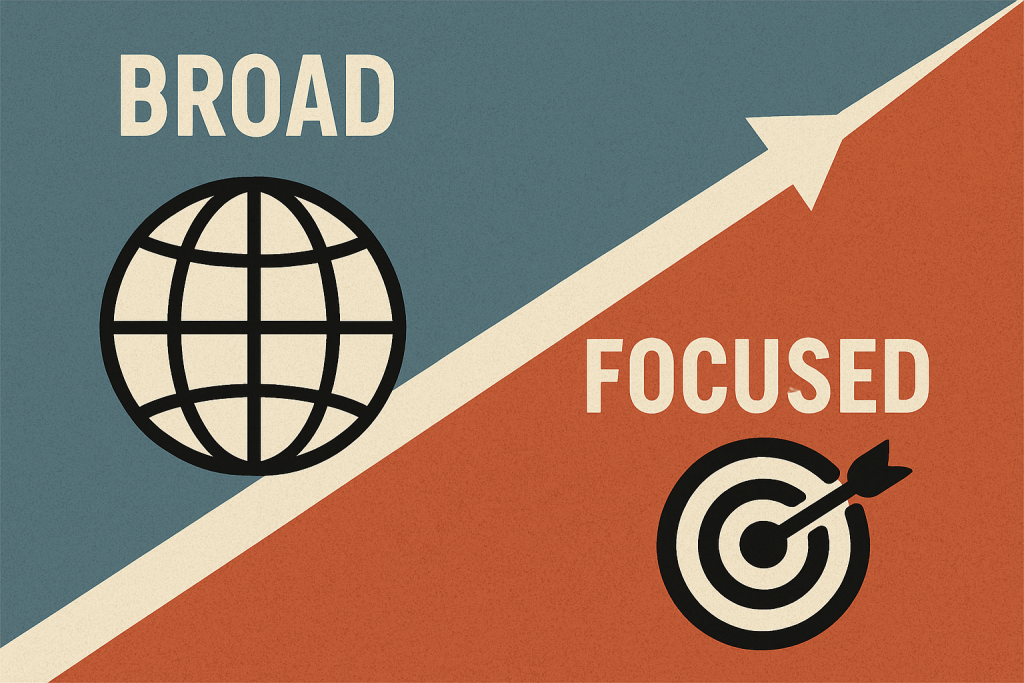 From Broad to Focused: While addressing multiple causes demonstrates admirable social consciousness, concentrated efforts often lead to more sustainable outcomes. A strategic focus allows for deeper relationships with communities and more significant results.
 From Activities to Results: Investing in measurement, transparency, and learning systems helps identify what truly works, enabling continuous improvement. This data-driven approach enhances both the impact and credibility of initiatives.
 From Reports to Stories: Authentic narratives of transformation inspire stakeholders and build trust. The most compelling CSR communications highlight real-life changes rather than just presenting statistics.
The Path Forward
India’s corporate social responsibility (CSR) landscape has evolved significantly since the introduction of the Mandate. Corporate India has shown a genuine commitment to social causes by establishing numerous successful programmes and making substantial contributions to national development priorities.
The current opportunity lies in building on these strong foundations. Companies that adopt strategic approaches, invest in measurement systems, and enhance community engagement will set new standards for corporate social responsibility.

The future looks promising: Corporate India can expand upon its impressive CSR journey to create even more meaningful and sustainable impact. Our study suggests that with the right frameworks and strategic focus, the existing momentum can be harnessed to drive transformational change that benefits both communities and businesses. The foundation is solid, and the potential is vast. The question is not whether Corporate India will succeed in its social mission, but rather how quickly it can unlock its full impact potential.