

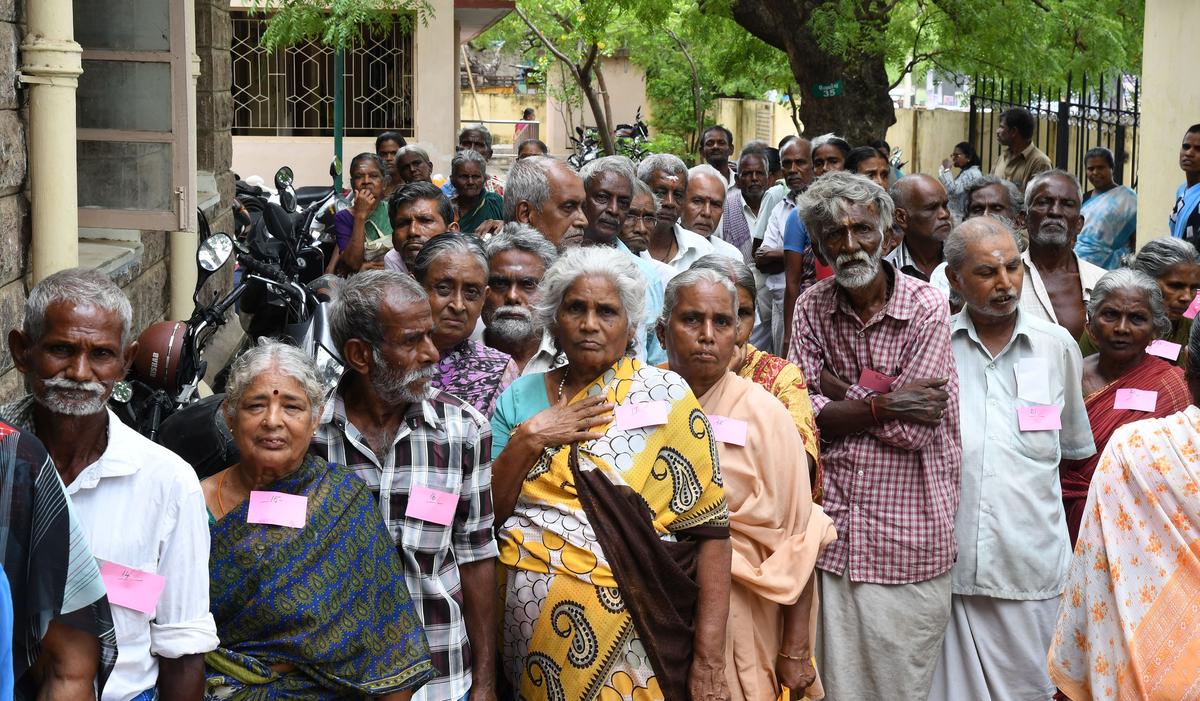
 Faridabad: As India undergoes a historic demographic transition, with the population of senior citizens projected to exceed 230 million by 2036 and cross 320 million by 2050, the need for comprehensive, rights-based, and governance-focused strategies for ageing has become a national priority.
Recognising this, Manav Rachna University, in collaboration with Daksh Foundation, organised a conference on Senior Citizen Welfare 2026 on the theme “Ageing India: Emerging Challenges & Inclusive Solutions.” The national-level conference positioned elder welfare as a central pillar of good governance, social justice, and inclusive development, emphasising the dignity, rights, and active participation of senior citizens in society.
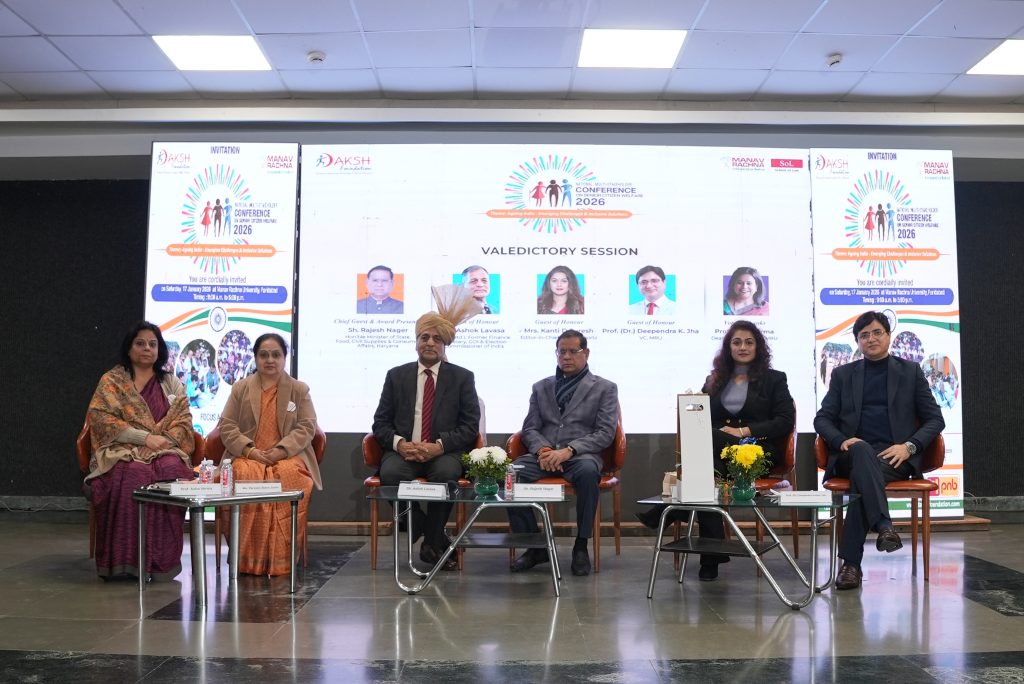 The event was graced by Sh. Rajesh Nagar, Minister of State (Food, Civil Supplies & Consumer Affairs), Government of Haryana, as the Chief Guest. The inaugural session also witnessed the presence of Sh. Hanif Qureshi, IPS, Additional Secretary, Ministry of Heavy Industries, Government of India, who emphasised that senior citizens are vital repositories of wisdom and values, and that India’s younger generations need their guidance as much as elders need protection, calling for policy-driven, inclusive governance frameworks that uphold dignity, security, and intergenerational responsibility.
Sh. Rajesh Nagar said, “Senior citizens are an integral part of our society, contributing their experience, knowledge, and values. It is essential to ensure their well-being, dignity, and active participation in community life. It is equally important to address the challenges they face and strengthen policies and support systems to safeguard their welfare.”
Against the backdrop of India’s evolving legal and policy framework for senior citizens, the conference addressed pressing challenges, including geriatric healthcare, mental well-being, financial security, legal protection, digital inclusion, and age-friendly governance. Discussions highlighted the urgent need to strengthen implementation, raise awareness, ensure judicial access, enhance inter-agency coordination, and cultivate community participation, moving beyond traditional welfare approaches toward integrated, outcome-oriented governance.
Dr Asha Verma, Dean, School of Law, Manav Rachna University, said, “Senior citizens face challenges that society often chooses to overlook, ranging from financial insecurity, loneliness, and mental health concerns to cyber fraud, property disputes, and gaps in legal protection. This conference was conceived to bring these lived realities into the policy and governance conversation. Our objective is to move beyond charity-driven solutions towards rights-based, dignified, and accountable frameworks that recognise elders as integral contributors to society. The deliberations will culminate in concrete policy recommendations to strengthen senior citizen welfare at both the state and national levels”
Brig N N Mathur, Chief Advisor (Elder Care & Welfare), Daksh Foundation, said, “Through our initiative ‘Khyal Apne Buzoorgon Ka,’ we aim to turn awareness into action for senior citizens. By bringing together policymakers, experts, and youth, the conference reinforces elder dignity, strengthens governance, and strengthens intergenerational dialogue, ensuring senior welfare is central to India’s social and policy priorities.”
AVM LN Sharma, Chief Advisor (Education, Ethics, and Values) at Daksh Foundation, emphasised the need to sensitise children to respect elders and understand their needs, noting that such awareness helps build a more inclusive and supportive society for senior citizens.
Sh. Sanjay Kundu, IPS, Chief Advisor (Governance and Public Safety) at Daksh Foundation, spoke on the implementation of central government policies for elderly care, highlighting the role of governance and public safety institutions in ensuring protection, access to welfare schemes, and dignity for senior citizens.
 The conference deliberations were anchored around four interlinked thematic pillars that reflect the core dimensions of senior citizen welfare in India. Discussions examined the evaluation of government schemes, legal protection, security, and access to justice for elders, alongside critical issues of geriatric healthcare, mental wellbeing, family support, and social dignity. The dialogue further addressed the need for senior citizen-friendly infrastructure, policy innovation, and age-friendly governance frameworks that respond to the realities of an ageing population.
A distinctive aspect of the conference was its emphasis on intergenerational engagement, recognising that India’s youth require value-based guidance, civic orientation, and national inspiration—areas where senior citizens and veterans can play a transformative role. By positioning elders as mentors, custodians of experience, and active contributors to society, the conference highlighted that ensuring the dignity, safety, and participation of senior citizens is fundamental to good governance, accountability, and inclusive nation-building.
Through this national multi-stakeholder platform, Daksh Foundation’s flagship initiative “Khyal Apne Buzoorgon Ka,” in partnership with Manav Rachna University, Veteran India Foundation, and All India Lawyers Forum, aimed to elevate the discourse on ageing to a policy-oriented, academically rigorous, and nationally relevant level. The conference seeks to serve as a catalyst for governance reform, institutional collaboration, and societal change, reaffirming India’s commitment to caring for its senior citizens with dignity, inclusion, and justice.